Meet the Artist
Gosari
Sak-da: The Poetics of Decomposition
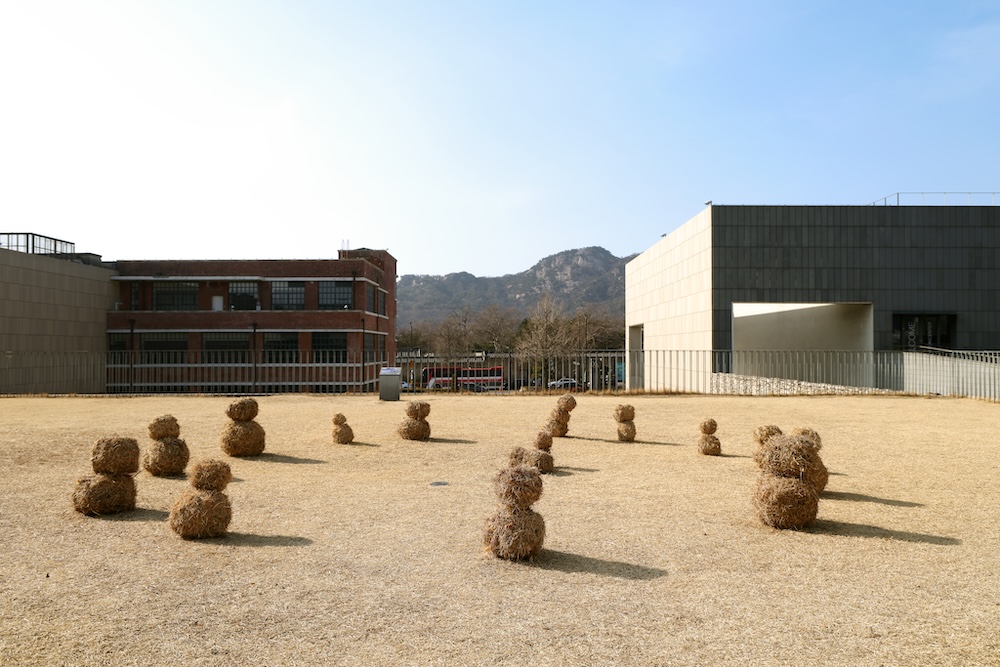
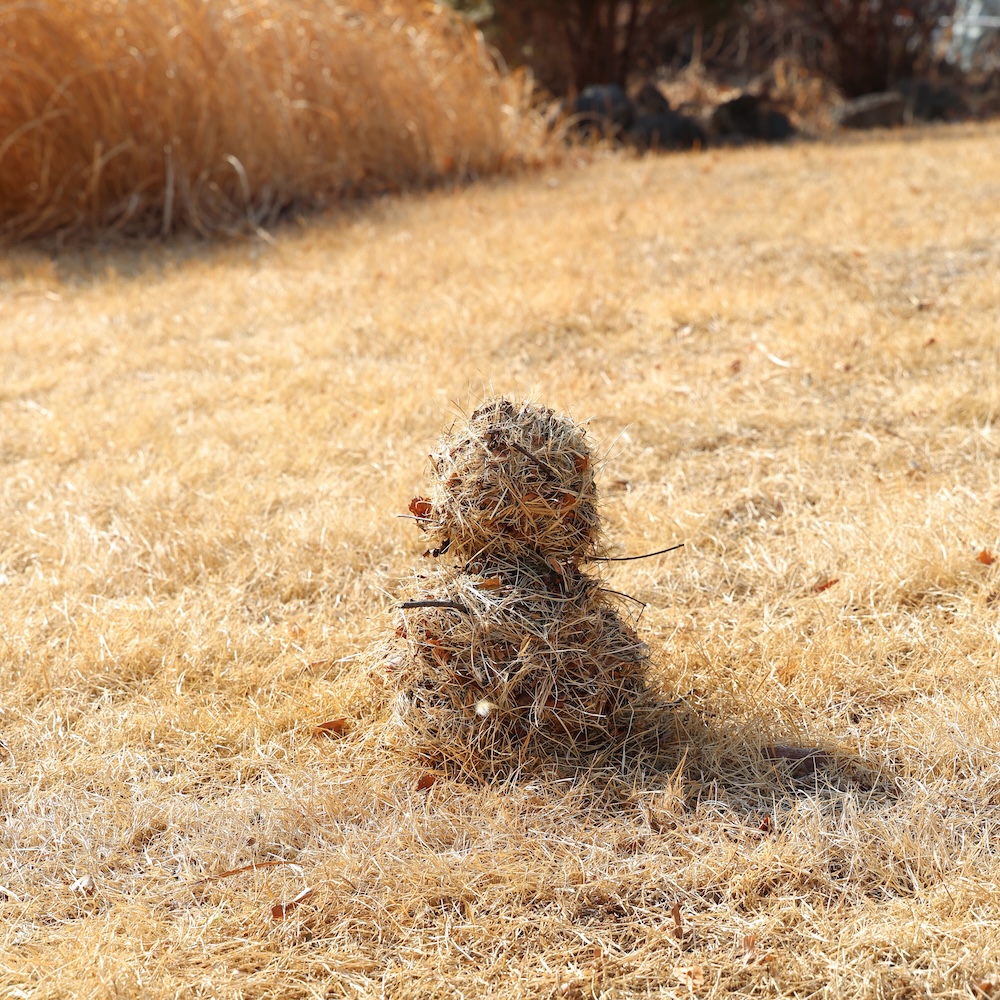
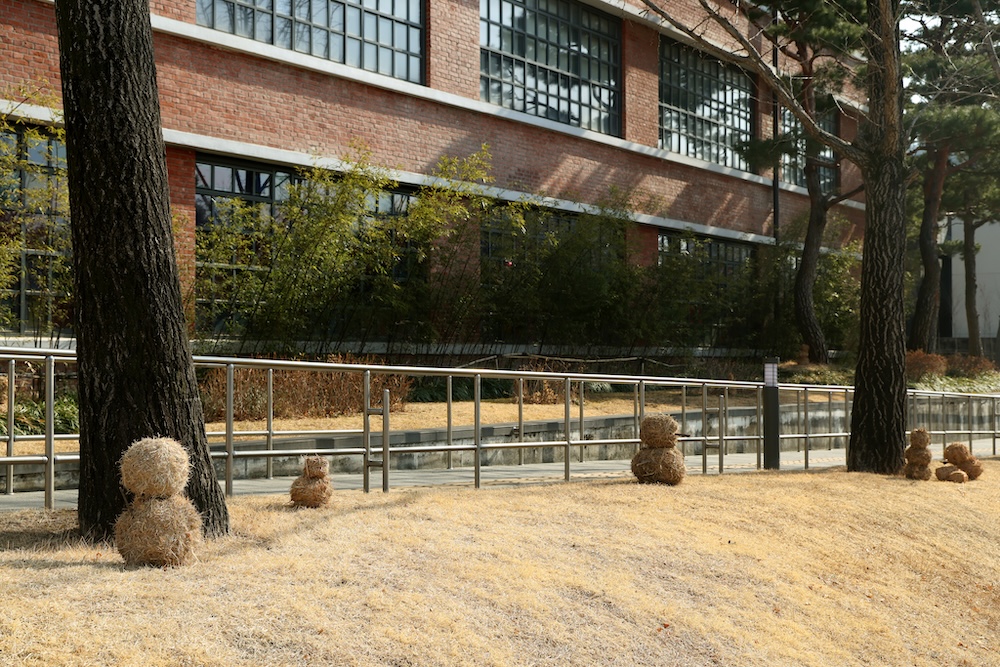
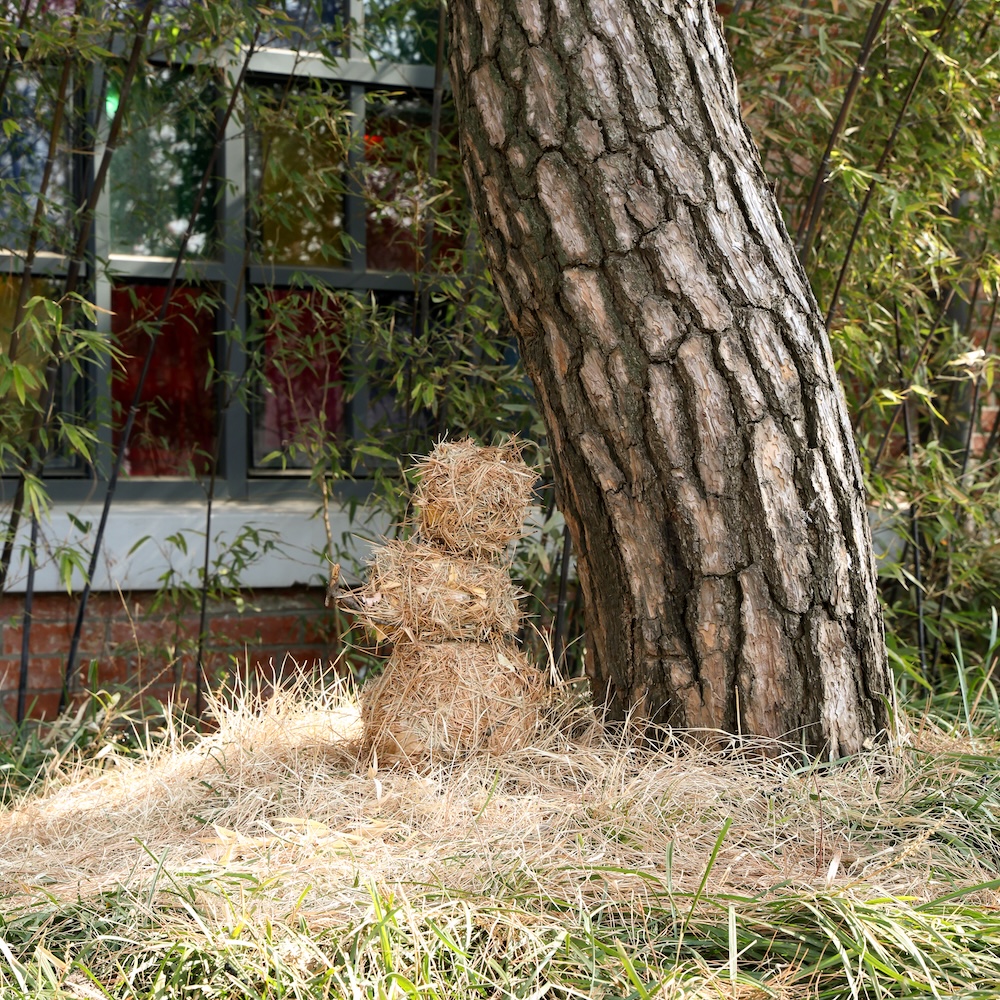
The special exhibition Sak-da: The Poetics of Decomposition at the National Museum of Modern and Contemporary Art, Korea (MMCA) poses questions about a longstanding belief surrounding artistic work: “Do things only have value when they remain unchanged?” One of the participating artists is Gosari, who embraces this question with a slower pace and humbler stance. As someone who has focused on often-overlooked things like weeds, stones, and food remnants—and on the process of them returning to the earth—she views decomposition not as disappearing but as deepening. For Grass Man, which is presented in the museum’s Gallery Madang and garden, she assembled weed trimmings and fashioned them into the shape of a person. This presence, which will exist alongside the exhibition for a brief moment before eventually returning to the earth, is less a completed sculpture than an image that reveals the passage of time between nature and people together. Gosari spoke with us about the life of “decomposition” and her approach toward art.
The sense of the Korean word sak-da, meaning “to decompose” or “to ferment,” appears to be closely connected to the approach you have shown in your work to date. How did you approach and interpret the exhibition’s theme of “sak-da art”?
To me, sak-da is something like living and breathing, a natural rhythm of life, so there are aspects where it is somewhat strange and difficult to approach it in terms of permanence and preservation. I view all things that exist as experiencing constant change. Behind the physical changes that occur as forms break down, boundaries disappear, and things blend together, there are emotional transformations that slowly enter that place and well up. For this exhibition, I view sak-da not as a concept of “disappearing” but as a process of a presence deepening.
What led you to turn your attention to easily-overlooked presences like weeds, stones, and food remnants?
My attitude toward life today can be traced back to my early childhood. My mother worked in hospitality, and she would clean and organize the rooms that guests had used, tending to the things they left behind. My father worked in architecture, but instead of building new structures, he would assemble all these items that had outlived their usefulness—preserving the meaning they held in his own way. These experiences helped me realize as a matter of course that the things that exist in the world each harbor their own meanings. I feel like my life and work today are informed by all those moments of just examining those unseen values.
|
|
|
|
Grass Man (2021, remade in 2026)
|
For Grass Man, you made a human form out of weed trimmings. Why weeds, and why a person?
Weeds are things that have been displaced by the competition among the stronger plants of the forest, putting their roots down in the soil of places where the human presence is felt, such as roadsides, fields, and reclaimed land. I have ambitions of a self-sufficient life, so I started keeping a garden a few years ago with other people in the village. Weeds grow with tremendous vitality, and they are typically maligned and treated as nuisances—even though they don’t seem to have done anything really wrong. It isn’t just gardens, though—weeds are with us almost everywhere, including parks and roadsides. I wanted to get along well with weeds in the time before they lived out their lives and returned to the earth. When it snows, we make snowmen as a way of keeping that experience with us for a time. In the same way, I wanted to gather weeds into a human shape in the hopes that we might not forget the experience of having all those nameless plants near us all the time.
You made an analogy between your work Grass Man and the spirit of a child making a snowman. I feel like viewers might experience similar emotions encountering this work around the exhibition space. What meaning do the ideas of “play” and the “child’s mind” hold in your work?
Just as plants sprout, grow, and return to the earth, people likewise are born, grow, and return to the earth. In this vast cycle, we are all connected, and I think the child’s mind exists in everyone within that connection. When we approach something with a sheer spirit of welcome, a form of childlike play begins, and we grow closer to each other. For me, the act of binding weeds to make a shape is both artistic work and a form of play and of relating. I want us to carry on a natural relationship where we are always there together with nature, sharing in the experience by coming together with the grass around us and creating a Grass Man.
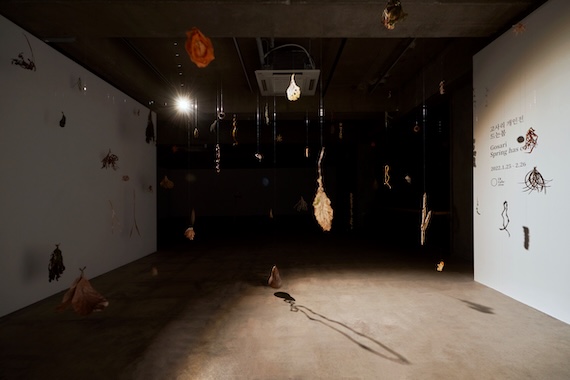 Earth Star (2022-2024)
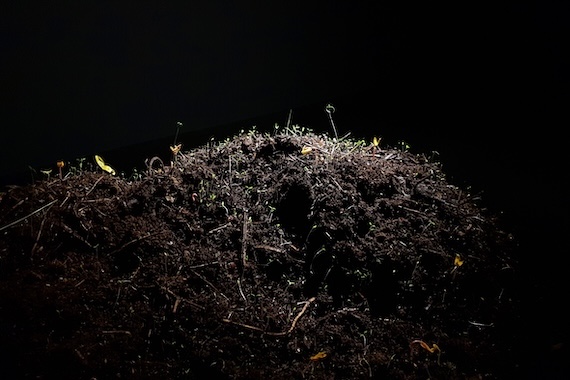 Compost Hill (2022)
Your experience with farming also appears to have been a major influence on your body of work. How have your methods of viewing and creating artistic work been influenced by the things you’ve learned through farming—the repetition, the waiting, and the sense of time through the passing seasons?
The experience of gardening to grow my own food holds a meaning for me beyond simply cultivating the earth. The tempos of nature that I sensed living through an ever-changing period from day to day—the sun rising, the wind blowing, the rain falling—helped me realize how all things cycle within their own flows. Just as a tiny seed waits through the earth’s repeated freezing and thawing until the soil softens, the invaluable experience of passing through the winter into the warmth and hope of the spring was something I hoped would be fully carried over into the work, which also transforms according to its own tempo.
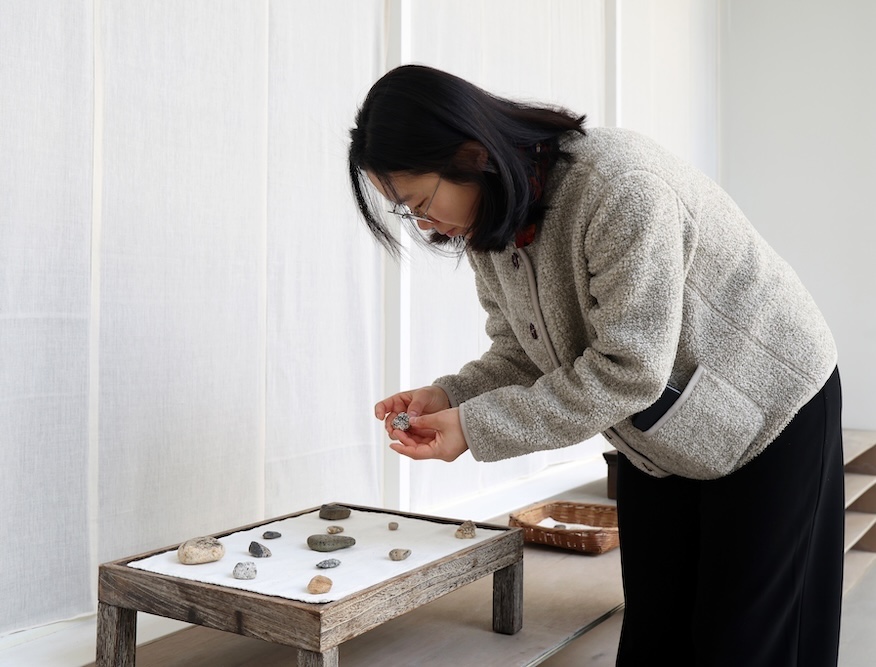
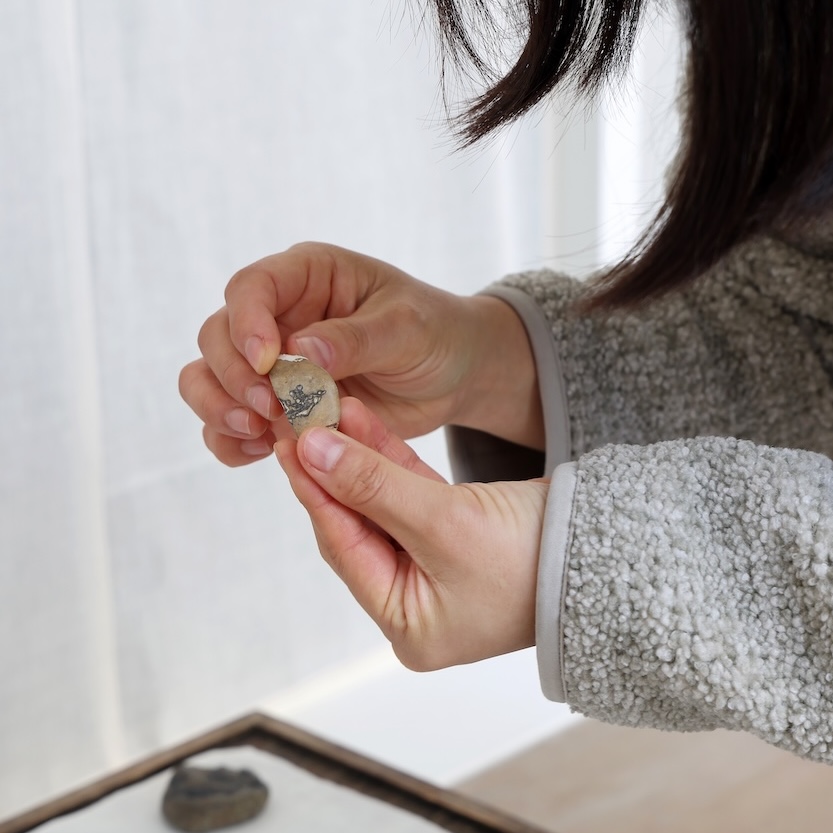
In previous works of yours like A Dredge Stone from the Earth, Earth Star, and Compost Hill, the very process of cleaning, drying, fermenting, and returning something to the earth is presented as part of the work.
To me, creation is not a matter of completing or finishing something. As we see when we eat food—where the process of leveling the ground and raising things ends up passing through our body to return to the earth again—matter is constantly changing. The moments of life are formed from the mingling of the different aspects of that—the sunlight, the water, the wind, and the labor. The same cycle applies to a person’s life. In our lives, we examine each other within society, approaching the different stories that each of us harbors. In my work, the act of washing, drying, and fermenting materials before returning them to nature is about sharing briefly in that life, contributing my own actions to that existing flow. In every realm of being, life already harbors other life, and the process of examining things unfolds naturally. I approach my work in terms of the experiences encountered with other living things and an attitude of exploring unseen values.
|
|
|
A Dredge Stone from the Earth (2018-2026)
|
What perceptions or questions do you hope viewers will take away after seeing Grass Man, a work that gradually transforms through the changes of the seasons before returning to nature?
Like Grass Man, we too transform gradually through the changes of the seasons before returning to nature. Much like those welcome encounters with the different aspects of the Grass Man as we linger in different parts of the museum, I hope that viewers can embrace an experience of looking at the many beings that surround them and exploring the quiet reverberations created in the process of life, with its emergence, continuation, and disappearing. I believe that our lives are enriched and made more mature by encounters with the presence that we have remained unaware of but that allow us to live. I want to continue working in a way that expresses my feelings as I approach those presences and share a warm message of greeting and thanks.
Gosari studied Western painting at the University of Ulsan as an undergraduate before completing graduate studies in painting at Hongik University. She has also practiced farming, gaining a sense of the flows of life that emerges from and returns to the earth. She focuses on objects, spaces, and the rhythms of nature, with an attitude of ecological sensitivity and care. Her work poetically evokes the cycles of life while encouraging viewers to contemplate the relationship between human beings and nature in new ways. It captures the traces of time acquired by objects and spaces that have been forgotten or neglected, restoring the relationships formed there and the textures of emotion contained within. Her major solo exhibitions include Untitled (Daechumoo Fine Art, Gangneung, 2023), Spring has coming (CR-Collective, Seoul, 2022), Woosil (Salt Museum, Jeung-do, 2020), Moving in (Seongbuk-dong, Seoul, 2018), and Enduring Hour (PSBR, Seoul, 2017).
|
Image Credits
|
|
*
Grass Man, 2021 (remade in 2026), mown grass and branches from the MMCA, parks, and playgrounds, hemp rope, 10 × 10 × 10 cm - 60 × 40 × 40 cm
*
Earth Star, 2022-2024, dried plants for three years, Dimension Variable. Photo: Lee Euirock
*
Compost Hill, 2022, compost fermented for 1 to 3 years, Dimension Variable, Photo: Gosari
*
A Dredge Stone from the Earth, 2018-2026, stones gathered from the garden, pencil, 1.5 × 2 × 3 cm - 3 × 10 × 8 cm. Photo: Kang Minkoo
*
Portrait of the artist Gosari. Photo: Kang Minkoo
|